
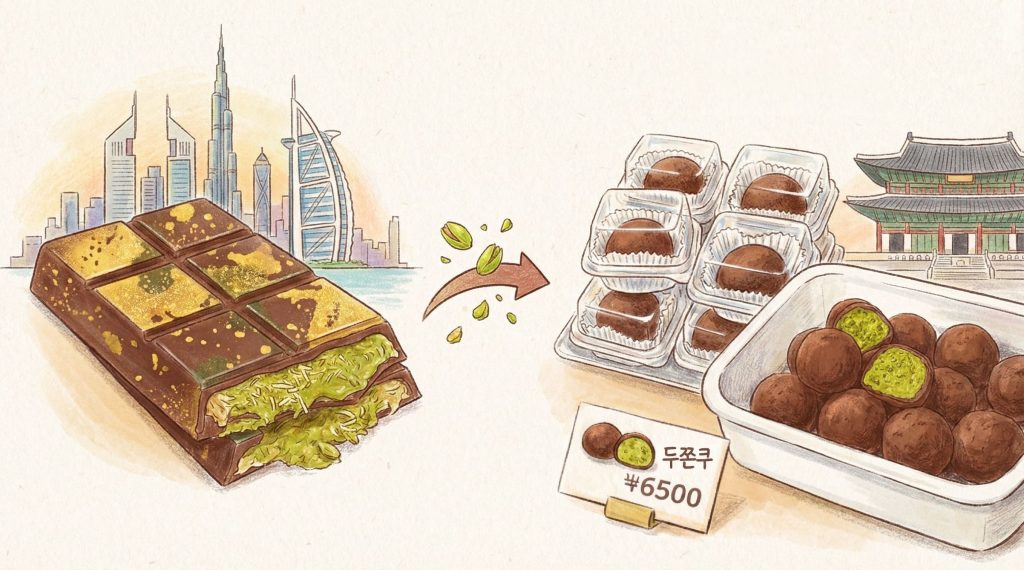
In recent weeks, an unexpected dessert has taken South Korea by storm: the Dubai chocolate chewy cookie. Inspired by the viral Dubai chocolate bar filled with pistachio cream and shredded knafeh pastry, this indulgent treat has become one of the most talked-about bakery phenomena across Asia.
Queues stretching for hours, daily sell-outs, ingredient shortages, and even real-time maps tracking availability: what may look like a social media fad actually reveals much deeper shifts in consumer behavior, ingredient sourcing, and cross-cultural innovation in Asia’s dessert scene.
For European producers and ingredient suppliers looking toward APAC, this trend offers valuable insights.
A global dessert, reimagined locally
The original Dubai chocolate bar became a global sensation thanks to its rich Middle Eastern flavor profile. In South Korea, bakers took this concept and reinterpreted it through a local lens.
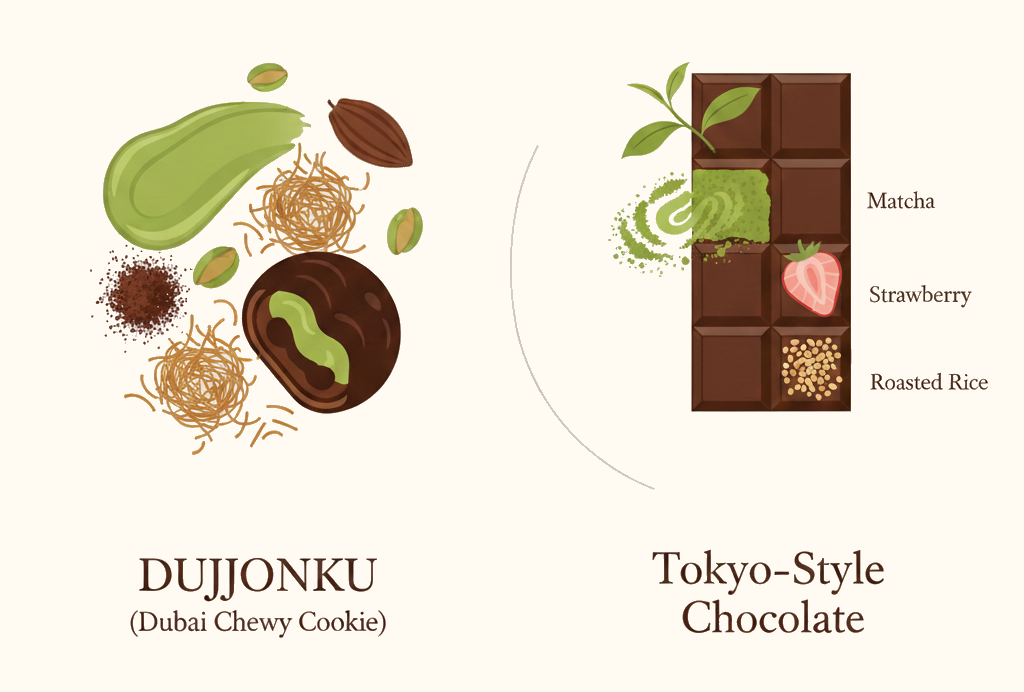
The result is not a traditional cookie, but something closer to a chewy rice cake or mochi-like dessert. Known locally as “Dujjonku” (Dubai chewy cookie), it features:
- pistachio cream,
- fried kataifi (knafeh pastry),
- chocolate notes,
- all wrapped in a marshmallow-based, chocolate exterior.
This adaptation highlights a key reality of Asian markets: successful products are rarely copied as-is. They are transformed to match local textures, visual expectations, and eating habits.
Why this trend resonates in Asia
Several factors explain the explosive success of the Dubai chewy cookie in Korea and its rapid spread to markets like Hong Kong:
1. Visual impact drives demand
Thickness, stretchiness, and dramatic “pull-apart” visuals dominate social platforms. In many Asian markets, visual indulgence matters as much as flavor balance, especially for Gen Z and younger consumers.
2. Texture is a strategic choice
Chewy, elastic textures resonate strongly in East Asia, from mochi to rice cakes. The marshmallow-based shell is not accidental; it aligns perfectly with local sensory preferences.
3. Global flavors, local execution
Middle Eastern ingredients like pistachio and kataifi are perceived as premium and exotic, but their success depends on how they are integrated into local formats. This is a textbook example of glocalization: global inspiration, local execution.
Ingredient pressure: when virality meets supply chains
A single Instagram post by singer Jang Won-Young helped trigger the acceleration, unleashing queues, sell-outs, resale speculation, and even real-time stock-tracking maps.
Within weeks:
- cafés and bakeries across Korea were overwhelmed,
- convenience stores launched mass versions,
- pistachio and kataifi prices surged,
- production quotas and purchase limits became standard.
When a product becomes this culturally “urgent”, supply chains feel it immediately, especially when key ingredients are imported and capacity is limited. It shows how quickly “signature ingredients” can become market bottlenecks, shifting from niche to essential almost overnight.
For ingredient manufacturers, this kind of trend creates opportunities, but also requires market readiness, flexibility, and local partners who understand demand cycles.
A broader signal: Asia’s appetite for globally inspired chocolate
The Dubai chewy cookie is not an isolated case. Over the past months, other chocolate concepts inspired by global cultures have started gaining traction across Asia and beyond.
One notable example is the rise of Tokyo-style chocolate, largely driven by initiatives from premium players such as Lindt, following the success of its Dubai-style chocolate creations.
By drawing on Japanese references such as matcha, strawberry, and roasted rice, Tokyo-style chocolate conveys refinement, balance, and craftsmanship. Unlike the Korean chewy cookie frenzy, this movement leans toward premiumisation, limited editions, and controlled storytelling rather than mass virality.
Taken together, these trends point to the same underlying shift: Asia is not just consuming global flavors, it is actively redefining them, whether through indulgent, viral formats or through more curated, high-end interpretations.
Navigating trends like these in Asia
Identifying trends is one thing. Turning them into sustainable business opportunities is another.
Between ingredient sourcing, regulatory requirements, logistics constraints, and local market adaptation, entering or expanding in APAC requires on-the-ground expertise and strong regional networks. Viral success alone is rarely enough; execution determines longevity.
At Gourmet Selection, we closely monitor these movements across Asia, working alongside European producers and Asian importers to help the right products meet the right markets, at the right time.
Because in Asia’s dessert landscape, today’s viral cookie can shape tomorrow’s ingredient demand, and what comes next is never entirely predictable.
Bangkok-style chocolate with pandan? Singapore-style chocolate with kaya? Kuala Lumpur-style chocolate with durian, for the boldest palates?
In a region where trends evolve at speed, those who understand both ingredients and markets are best placed to turn early signals into lasting opportunities.
Sources
Could “Tokyo-style chocolate” be the next big trend? (2025, November 11). Falstaff. https://www.falstaff.com/en/news/could-tokyo-style-chocolate-be-the-next-big-trend
Hemsworth, M. (2025, December 2). The Lindt Tokyo Style Chocolate Matcha Strawberry Bar is Tasty. TrendHunter. https://www.trendhunter.com/trends/lindt-tokyo-style-chocolate-matcha-strawberry
Bersola, C. (2025, December 17). Lindt Tokyo Style Chocolade taps matcha trend with global travel retail debut at key European airports. The Moodie Davitt Report. https://moodiedavittreport.com/lindt-tokyo-style-chocolade-taps-matcha-trend-with-global-travel-retail-debut-at-key-european-airports/
Woo, J.-W. (2026, January 6). Dubai chewy cookies online map shows store locations and stock levels in real time. Korea JoongAng Daily. https://koreajoongangdaily.joins.com/news/2026-01-06/culture/foodTravel/Website-that-shows-store-locations-stock-levels-of-Dubai-chewy-chookies-launches/2493915
Ng, K. (2026, January 14). South Korea: How a chewy cookie inspired by Dubai chocolate has taken over the nation. BBC. https://www.bbc.com/news/articles/c07xdv0mggzo
Cichowski, H. (2026, January 19). Dubai chocolate chewy cookies go viral in South Korea. Gulf News. https://gulfnews.com/food/dubai-chocolate-chewy-cookies-go-viral-in-south-korea-1.500410779
Shin, H. (2026, January 20). South Koreans Go Cuckoo For “Dubai-style” Cookies. Barron’s. https://www.barrons.com/news/south-koreans-go-cuckoo-for-dubai-style-cookies-6fed6555


