
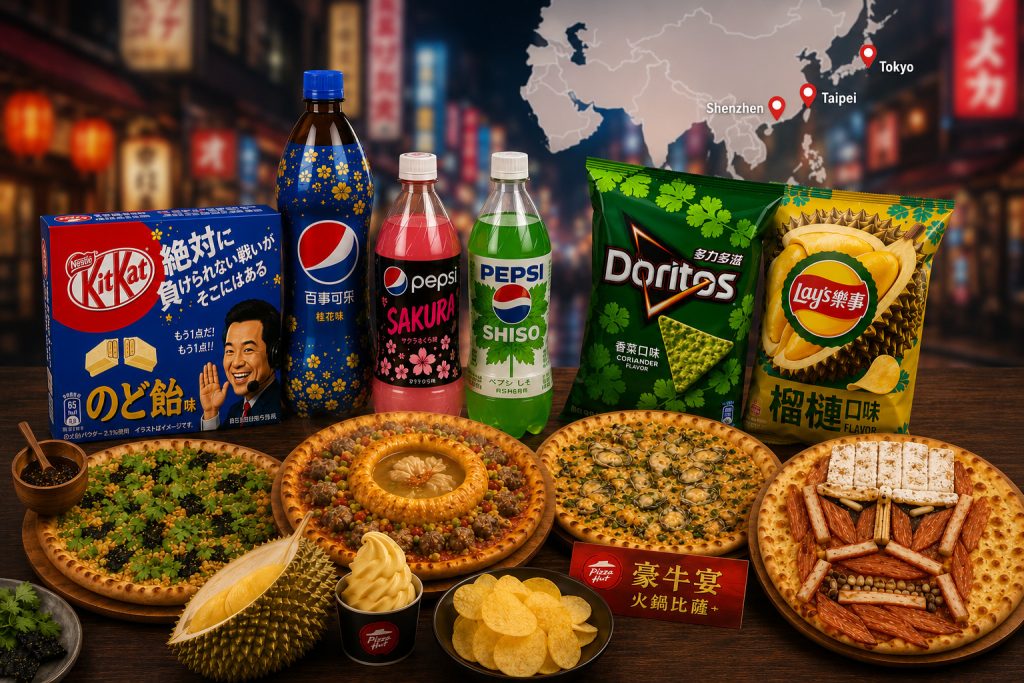
Chips & snacks: the front line of flavor localization
Iconic local dishes
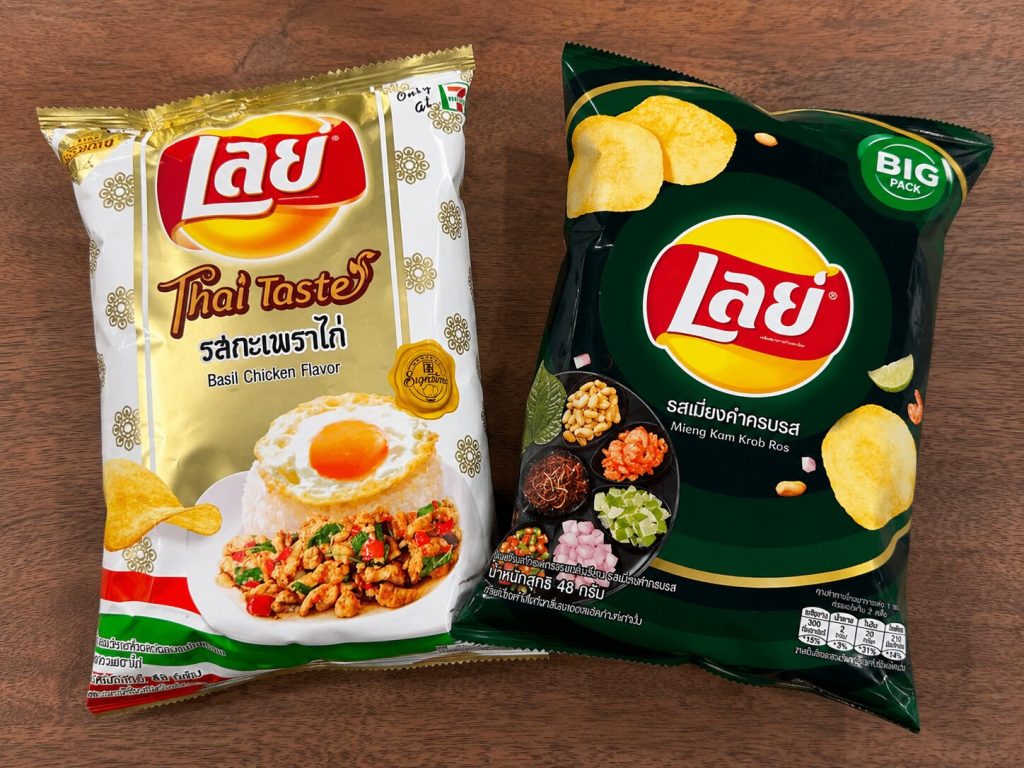
Thailand’s Lay’s
Thai Lay’s draws directly from the country’s most recognizable dishes. Holy Basil Chicken (Pad Krapow Gai) translates one of Thailand’s most ordered comfort foods straight onto a chip, while Green Curry channels the same coconut-and-herb complexity found in the country’s signature curry pots. Mieng Kam, a traditional betel-leaf wrap filled with of dried shrimp, lime, ginger, and chili, presents the toughest translation challenge of the three. Yet the chip manages to condense its complexity into something genuinely layered: the sweetness of fish sauce, an umami punch of dried shrimp, a citrus tang from lime, and the nutty depth of peanuts, all coming through in a single bite.
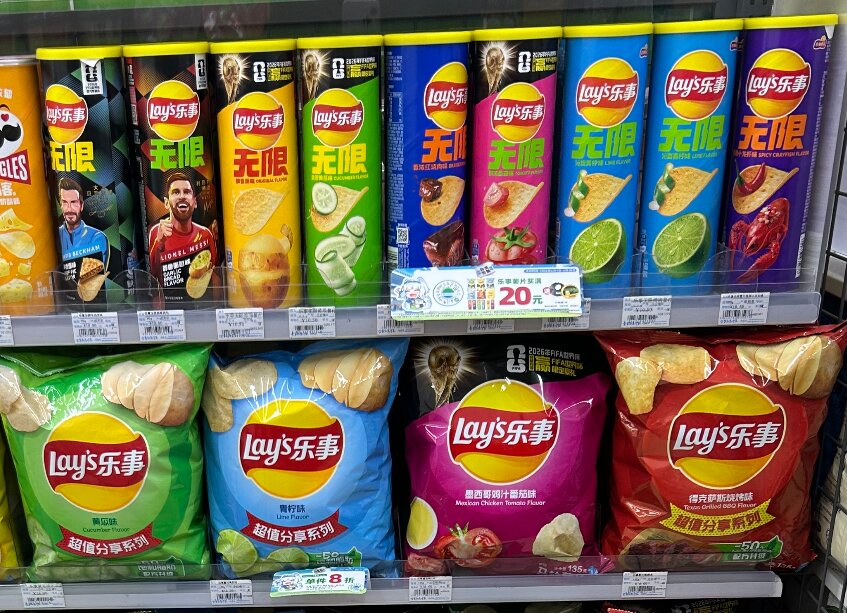
China’s Lay’s
China’s Lay’s is dedicated to recreating classic regional Chinese dishes. Spicy Crayfish, one of its earlier, now well-established flavors, channels the food culture of Jiangsu, where the dish is a beloved summer street food. The brand later expanded into a dedicated “regional limited” product line, producing flavors like Northeastern Guobaorou (a sweet-and-sour pork dish), which faithfully captures the sauce’s tangy-sweet balance alongside notes of garlic and savory meat, and LuoSiFen from Guangxi, a flavor that’s gone viral well beyond China’s borders.
A microcosm of food culture
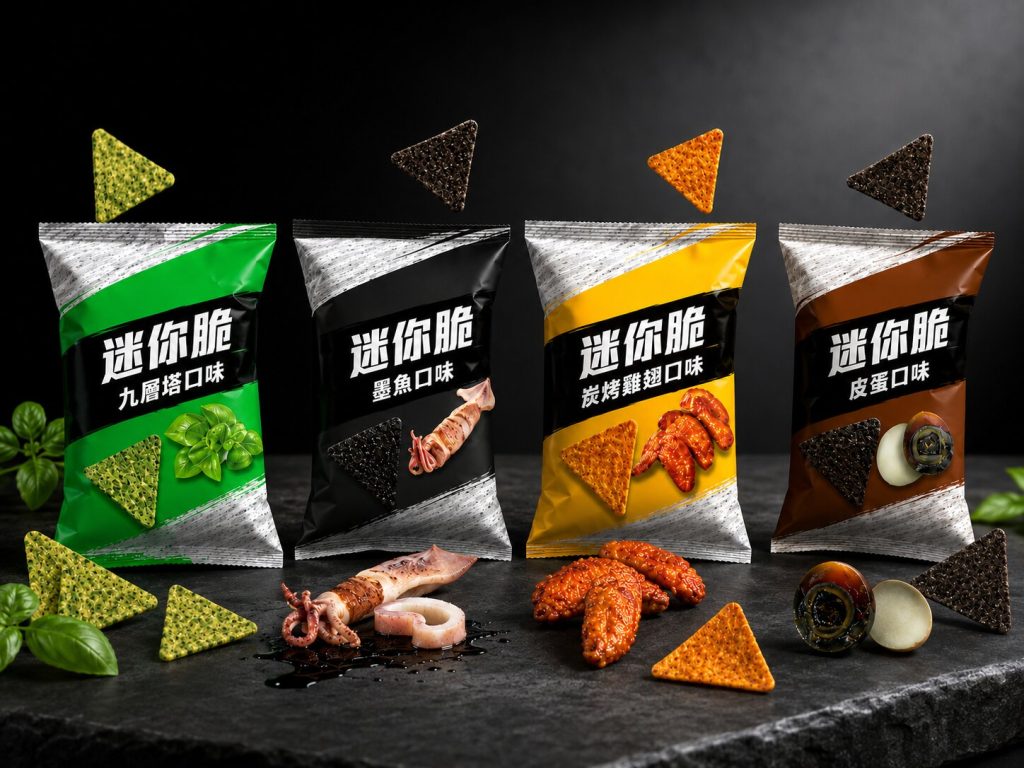
Taiwan’s Costco Doritos snack combo
Rather than betting on a single new flavor, this Doritos product breaks the mold entirely with a combo-pack approach: four flavors most familiar to Taiwanese consumers: squid, grilled chicken wing, Thai basil, and century egg – bundled into one box. Many online reviewers described pouring all four bags onto a single plate and eating it like a plate of Taiwanese stir-fried dishes, the way you’d order at a roadside re chao joint; others paired it with beer and fried chicken as a bar snack. The product’s success isn’t really about any individual flavor, but rather that it recreates the ritual of Taiwan’s stir-fry restaurant culture and drinking occasions.
Japan’s regional KitKat
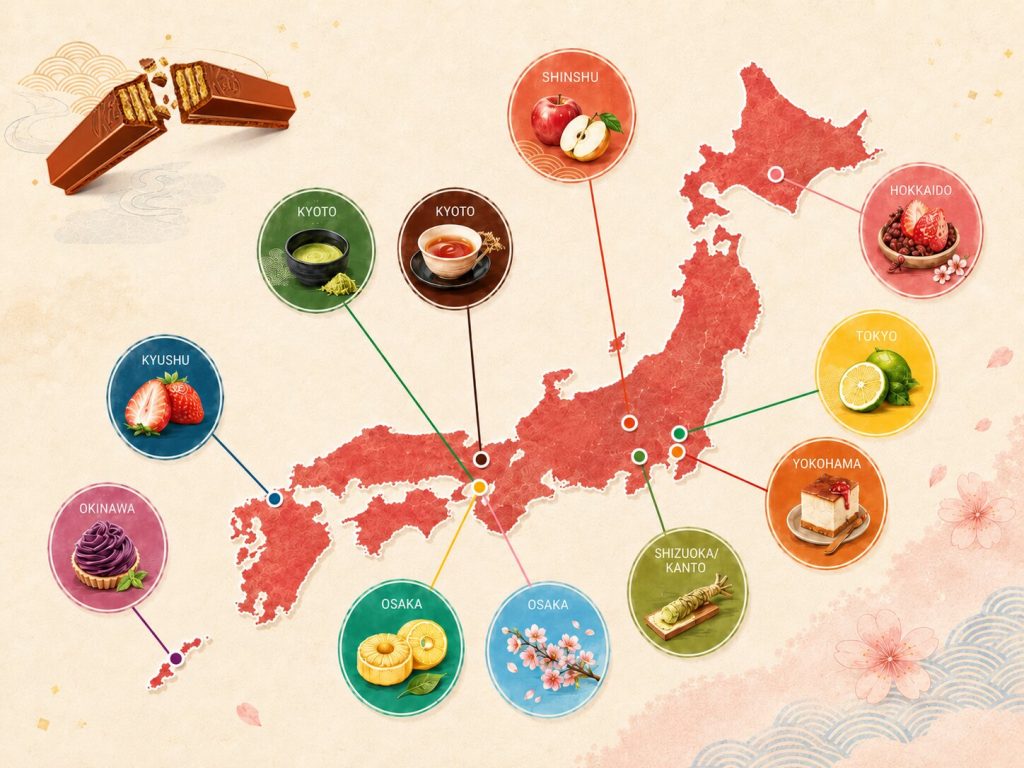
Since the 2000s, Japan’s KitKat has built out a portfolio of more than a dozen regional-limited flavors using local ingredients. Among them, red bean and strawberry from Hokkaido, wasabi from Shizuoka, pineapple candy from Osaka, purple sweet potato from Okinawa… Piecing together what amounts to a culinary map of Japan. Regional KitKat has since evolved into part of Japan’s omiyage (souvenir) culture, with the product’s value extending well beyond “snack” into social currency and keepsake. What makes this case particularly valuable is its timespan: it proves that regional flavor strategy isn’t a social-media-era invention, but a long-running strategy.
The business logic behind the experimentation
What looks like a handful of quirky regional snacks is, in aggregate, a serious business calculation. The Asia-Pacific snack food market alone is projected to grow from USD 89.54 billion in 2025 to USD 132.97 billion by 2030, a CAGR above 8%. Global brands have responded by combining consistent global quality standards with flavor profiles built specifically for each regional palate, rather than exporting a single global lineup across the continent.
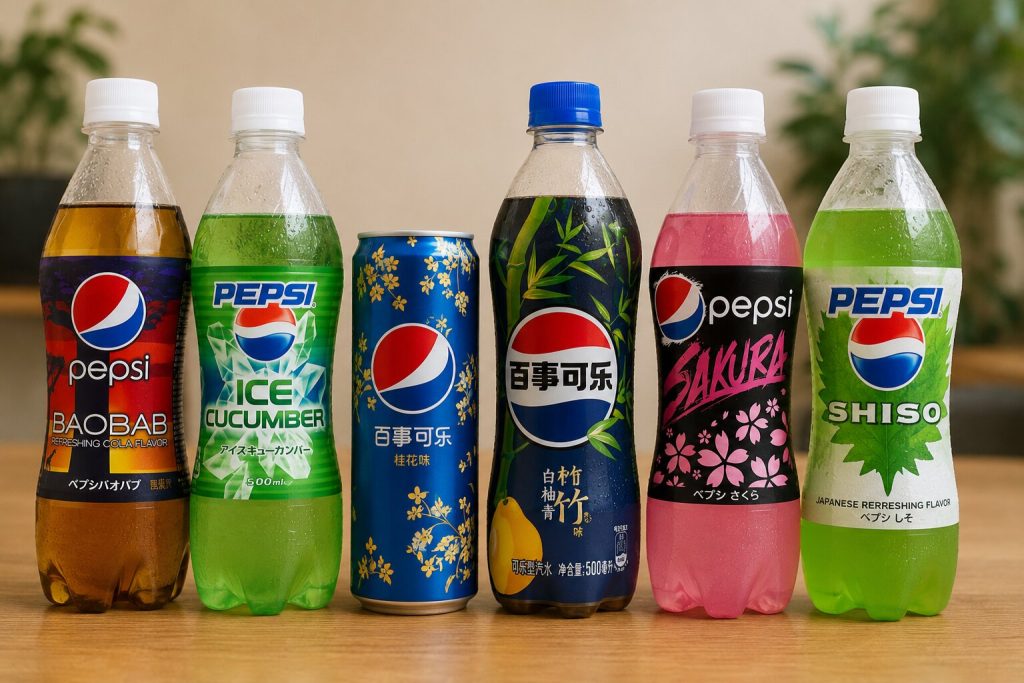
For the biggest players, this isn’t improvisation. PepsiCo treats understanding local food culture as a top business priority, not a marketing afterthought, spending meaningfully every year to study regional tastes before a single new flavor is greenlit. As one PepsiCo executive put it, immersing the brand in local food culture is “absolutely critical” to the food business, which explains why APAC often functions less like a standardized export market, and more like a genuine R&D lab.
Extreme cases triggering curiosity and debate
Beyond localization, global brands also capitalize on deliberately polarizing products to generate buzz.
Japan’s KitKat throat lozenge flavor
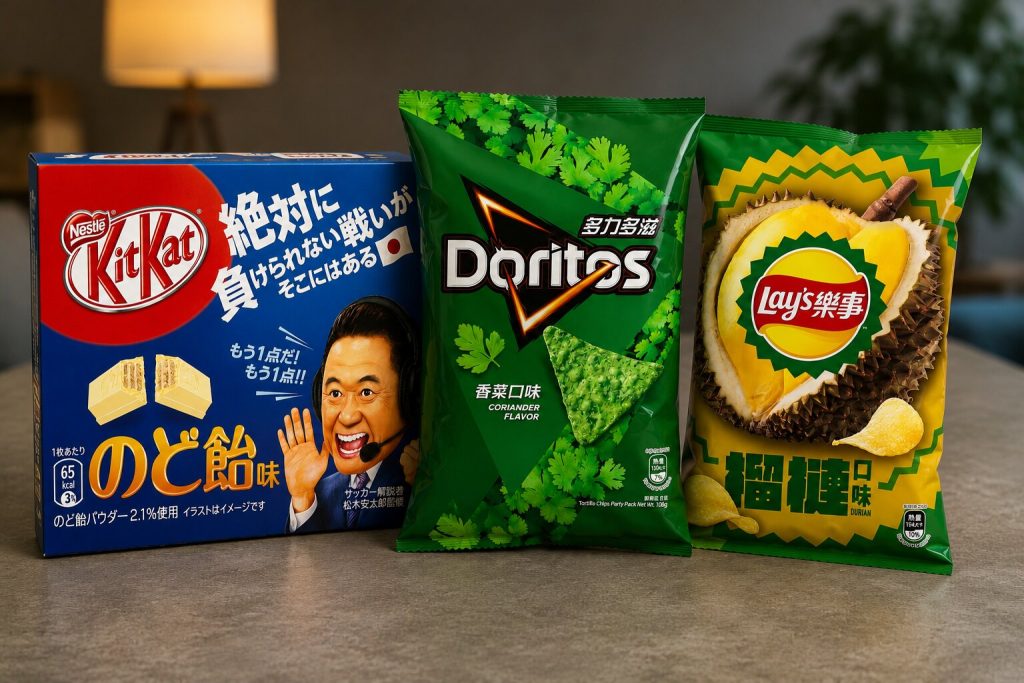
In 2017, Japan’s KitKat released a “Nodo Ame” (throat lozenge) flavor, quite literally blending 2.1% throat lozenge powder into white chocolate, marketed for its “cooling, refreshing” effect. The flavor was tied to a promotional tie-in with the 2018 World Cup Asian qualifiers, designed for fans who’d lost their voice from cheering and needed something to soothe a sore throat. Media and online reaction at the time leaned toward bemused curiosity, most who actually tried it described something closer to a mint chocolate treat than candy, with strong menthol, medicinal notes more reminiscent of cough drops than confectionery. Absurd as the concept was, that very absurdity is what got people talking: curiosity about what it actually tasted like became the product’s biggest marketing asset.
Taiwan’s coriander Doritos
In April 2025, the launch of coriander Doritos sparked widespread online discussion in Taiwan. The product was a runaway commercial success, it sold out almost immediately, with stores struggling to keep it in stock. Consumer reactions split sharply down the middle: some rushed to try it, posting that it was “surprisingly delicious” or bragging about “checking three stores before finally finding a bag,” while others recoiled at the idea, admitting they were “a little scared” or simply opting to pass. In recent years, brands have increasingly tapped into the long-running, near-tribal divide between cilantro lovers and haters, turning that built-in conflict into one of the most reliable traffic drivers in snack marketing.
Taiwan’s durian Lay’s
Durian Lay’s launched almost simultaneously with Coriander Doritos, and drew an equally divided response: even self-proclaimed durian lovers admitted the chip hadn’t quite nailed the fruit’s signature flavor. Despite the mixed reviews, the chips topped the rankings as Taiwan’s most talked-about novelty snack of the past three years within weeks of their April 2025 debut, a clear sign of just how much online buzz they generated. Whether or not these products actually tasted good almost became beside the point: the controversy itself drove the conversation, and that conversation translated directly into sales.
Pizza Hut Taiwan’s formula for going viral
What does a pizza chain do when pizza itself stops feeling exciting? For Pizza Hut Taiwan, the answer was to make people stop and stare: durian, mala hotpot, oyster omelette, cilantro with pig’s blood cake, an ever-rotating lineup of intentionally jarring combinations few would expect to find on a pizza. Behind the chaos sits a surprisingly disciplined system: what the brand internally calls the “3T model” – Talkability, Traffic, and Transaction. Every new flavor gets evaluated against these three metrics in real time, and Talkability sits at the top of that hierarchy for a simple reason: online attention for any given flavor lasts roughly two weeks before it fades. Outlasting that window means constantly feeding the cycle with something new.
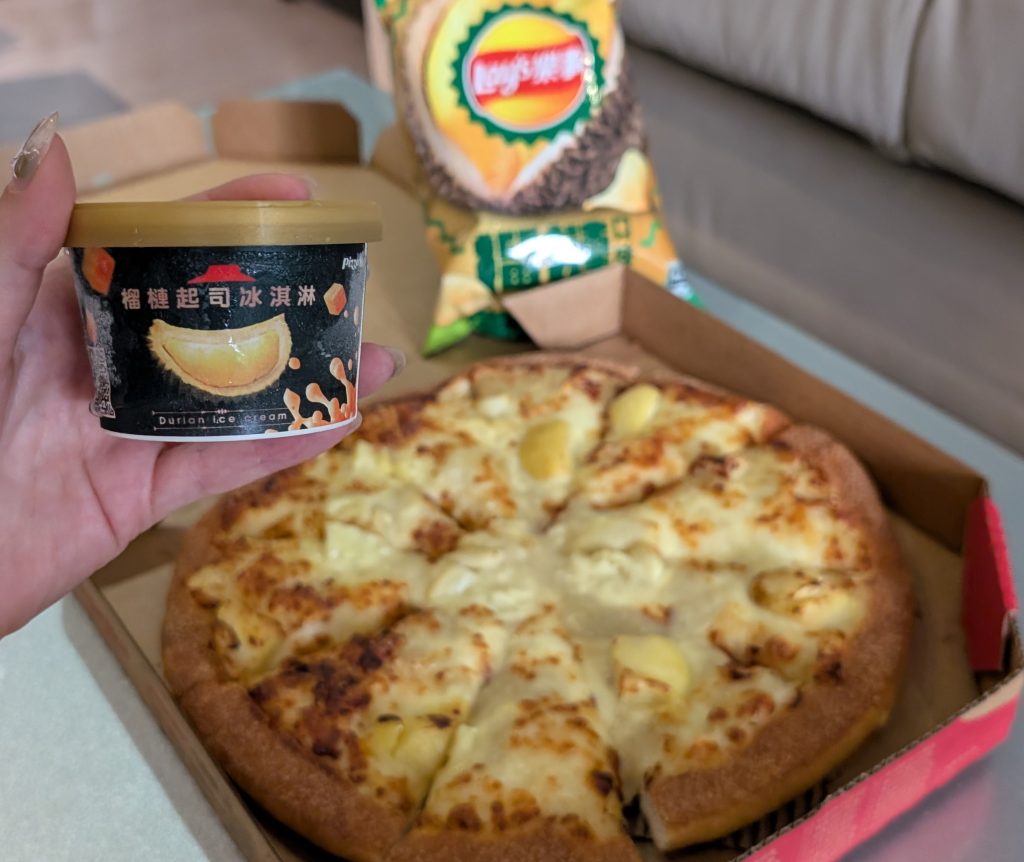
Durian pizza was the test case that proved the model worked. Within three days of launch, an entire month’s production sold out. The flavor itself didn’t even need to be universally loved; the controversy alone (durian famously splits people into two camps) was enough to keep the conversation going, and that conversation converted directly into sales. Now Pizza Hut pushed the concept even further by offering a full durian-themed menu, pairing its durian pizza with Lay’s durian-flavored chips and durian ice cream.
Shape and concept matter as much as flavor when it comes to capturing Gen Z’s attention. A giant Titan-face pizza tied to Attack on Titan leaned into anime fandom; a turtle-shaped “herbal rice cake” pizza released around Tomb-Sweeping Festival, modeled after the traditional offering food cao zai guo, wrapped a culturally loaded shape around an unconventional flavor combination. The more visually startling or conceptually unexpected a product was, the more it traveled online.
What makes this case worth watching beyond Taiwan is how far the playbook traveled. Singapore and Malaysia both launched their own durian pizzas, and Pizza Hut Japan released two consecutive cilantro-themed pizzas explicitly inspired by Taiwan’s approach, turning what started as one market’s local experiment into a strategy template adopted across the region.
Why buzz has an expiration date
Pizza Hut’s two-week attention window isn’t an isolated quirk, it’s a symptom of something bigger happening across APAC’s snack and food industry. Social platforms haven’t just made food trends more visible, but also made them move faster. A flavor like Coriander Doritos or Durian Lay’s can go from niche discovery to nationwide talking point in days, then just as quickly get replaced by the next thing. Brands can no longer rely on one or two flagship launches a year; they’re now under constant pressure to release something new before the last buzz fades.
That pressure makes brands more willing to invest in flavor R&D. A single viral moment can generate visibility traditional advertising struggles to match, while the downside of a flavor that flops stays contained, most new flavors launch small and limited first, only earning a permanent spot on shelves if demand proves real. So social attention hasn’t replaced marketing budgets; it’s redirected them toward more frequent, smaller, faster experiments.
Gen Z adds the third piece: trying a new flavor has become content in itself – unboxings, reactions, taste-test debates – and the more polarizing the product, the more shareable it is. That gives brands a direct incentive to lean into boldness over safety.
As these examples show, F&B trends in APAC evolve fast and often unpredictably. That pace can be exciting, but it’s also a lot to keep up with on your own. Gourmet Selection has spent years helping European brands enter Asian markets, staying ahead of these trends and understanding what local consumers actually want. Today, we also help bring outstanding Asian products to Western markets. From bold limited-edition innovations to traditional specialties with international appeal, we work closely with a wide network of Asian manufacturers to identify products with real export potential. If you’re exploring opportunities in either direction, we’d love to talk.
Sources
Asia-Pacific Snack Food Market Size & Share Analysis – Growth Trends and Forecast (2026 – 2031). (2026). In Mordor Intelligence. https://www.mordorintelligence.com/industry-reports/asia-pacific-snack-food-market
Doering, C. (2024, February 26). How PepsiCo, Kellanova adapt their snacks to local tastes around the world. Food Dive. https://www.fooddive.com/news/pepsico-kellanova-snacking-lays-pringles-emerging-markets-global-menu/699975/
Hanny. (2022, February 8). 【泰國超市】只有泰國有,泰國限定版Lay’s樂事洋芋片 6 款特色口味介紹,好吃到讓人Hold不住啦!. 曼谷幫走跳旅遊. https://bkk.com.tw/lays-thai-only/
ご当地キットカット. KitKat. https://kitkat.nestle.jp/gotouchi
戴婧雯. (2025, July 6). 樂事榴槤、香菜多力多滋夯爆!你吃過了嗎?台灣十大特殊口味零食揭曉. 網路溫度計. https://dailyview.tw/daily/4606
梁雯晶, MarkLee, & 高麗音. (2024, May 9). 「不要玩食物!」必勝客Pizza Hut如何以創意食材重塑品牌DNA?. VERSE. https://www.verse.com.tw/article/pizza-hut-dna


